
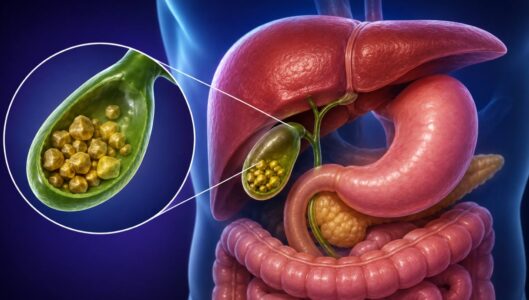
Even though gallbladder stones are a common digestive problem, many people ignore them. But ignoring them can lead to complications that cause grave issues. It can cause severe blockage and even move to other digestive organs. That is why it is crucial to know the gallbladder stones symptoms that you shouldn’t ignore. Let’s learn about them in detail, and the signs of gallstones.
What are Gallstones?
Bile is a crucial digestive fluid that is produced by the liver and stored in the gallbladder. As the gallbladder contracts when you eat, bile is emptied into the duodenum, the first part of the small intestine. Sometimes, bile can harden and form a deposit inside your gallbladder. This deposit is what we call the gallstones.
The size of the gallstones can range from the size of a grain of sand to the size of a golf ball. In some cases, people develop only one gallstone, whereas in others, many gallstones develop at the same time. If you experience symptoms because of gallstones, you will need surgery to remove your gallbladder. However, if there are no signs or symptoms, you will not need any treatment.
There are two types of gallstones that can be found in the gallbladder:
- Cholesterol gallstones: These are the most common types of gallstones. They are yellow in colour and are composed mainly of undissolved cholesterol and some other components.
- Pigment gallstones: Pigment gallstones are dark brown or black in colour. They get this colour when the bile has too much bilirubin.
Why are Gallstones formed?
While we don’t know for sure why gallstones are formed, here are a few causes that doctors think might be behind their formation:
- Too much cholesterol in the bile – In normal situations, bile has enough chemicals needed for dissolving the cholesterol your liver excretes. On the other hand, if the liver excretes more cholesterol than bile can dissolve, the excess cholesterol will form crystals that eventually form stones.
- Too much bilirubin in the bile – When red blood cells break down, the liver produces bilirubin. When someone has conditions like liver cirrhosis, blood disorders, and biliary tract infections, bilirubin levels rise and excess bilirubin forms gallstones.
- Gallbladder isn’t emptying correctly – In case your gallbladder isn’t emptying frequently or completely, the bile may become concentrated, leading to gallstones.
Why is it important to treat Gallstones?
If the gallstones aren’t treated, they can lead to the following complications:
- Inflammation: A gallstone lodged in the neck of the gallbladder causes cholecystitis, which produces fever and severe pain in the upper right abdomen.
- Blockage of the bile duct: When a gallstone blocks the bile duct, bile backs up into the liver, causing jaundice, upper abdominal pain, and, in some patients, infection within the duct itself.
- Blockage of the pancreatic duct: A stone at the junction of the pancreatic and bile ducts obstructs pancreatic drainage, triggering pancreatitis severe enough to require hospital admission in most cases.
- Gallbladder cancer: Even though the risk is small, doctors have seen that patients with a history of gallbladder stones also have an increased risk of gallbladder cancer.
Gallstones Symptoms You Shouldn’t Ignore
Now that you understand the severity of the situation, you know that you shouldn’t ignore gallstones. These stones usually cause no signs or symptoms. However, if they cause a blockage in the duct, you might experience the following symptoms:
- Severe, intensifying pain in the upper right side or centre of the abdomen
- Nausea or vomiting
- Back pain
- Pain in the right shoulder
Pain caused by gallstones can last from a few minutes to several hours. If you experience abdominal pain so intense that you are not able to find a comfortable position to sit, you should seek immediate care. Apart from this, if you develop symptoms of jaundice, such as yellowing of the whites of your eyes and skin, you should make an appointment with your doctor. High fever with chills is also a symptom of a serious gallstone complication that needs to be checked out.
Are there any Risk Factors?
- People over the age of 40
- Women, especially pregnant women
- Being obese and living a sedentary lifestyle
- Eating a diet high in fat & cholesterol, and low in fibre
- Having a history of gallstones or liver disease
- Having diabetes or certain blood disorders like leukaemia or sickle cell anaemia
- Rapid weight loss
- Medications containing estrogen, such as hormone therapy drugs or oral contraceptives
Conclusion
Gallstone symptoms are easy to dismiss. The pain comes and goes, meals seem like the obvious culprit, and most people wait to see if it settles. Sometimes it does. But recurring pain in the upper right abdomen, nausea that follows fatty food, or skin and eyes turning yellow are not symptoms to monitor from home. These points refer to the gallbladder and need to be checked out immediately. An ultrasound can confirm gallstones in a single appointment. The risk of waiting is not just prolonged discomfort.
An untreated blocked bile duct can lead to infection or pancreatitis, both of which require emergency treatment. If the symptoms described in this article are familiar, book an appointment rather than wait for the next episode.